


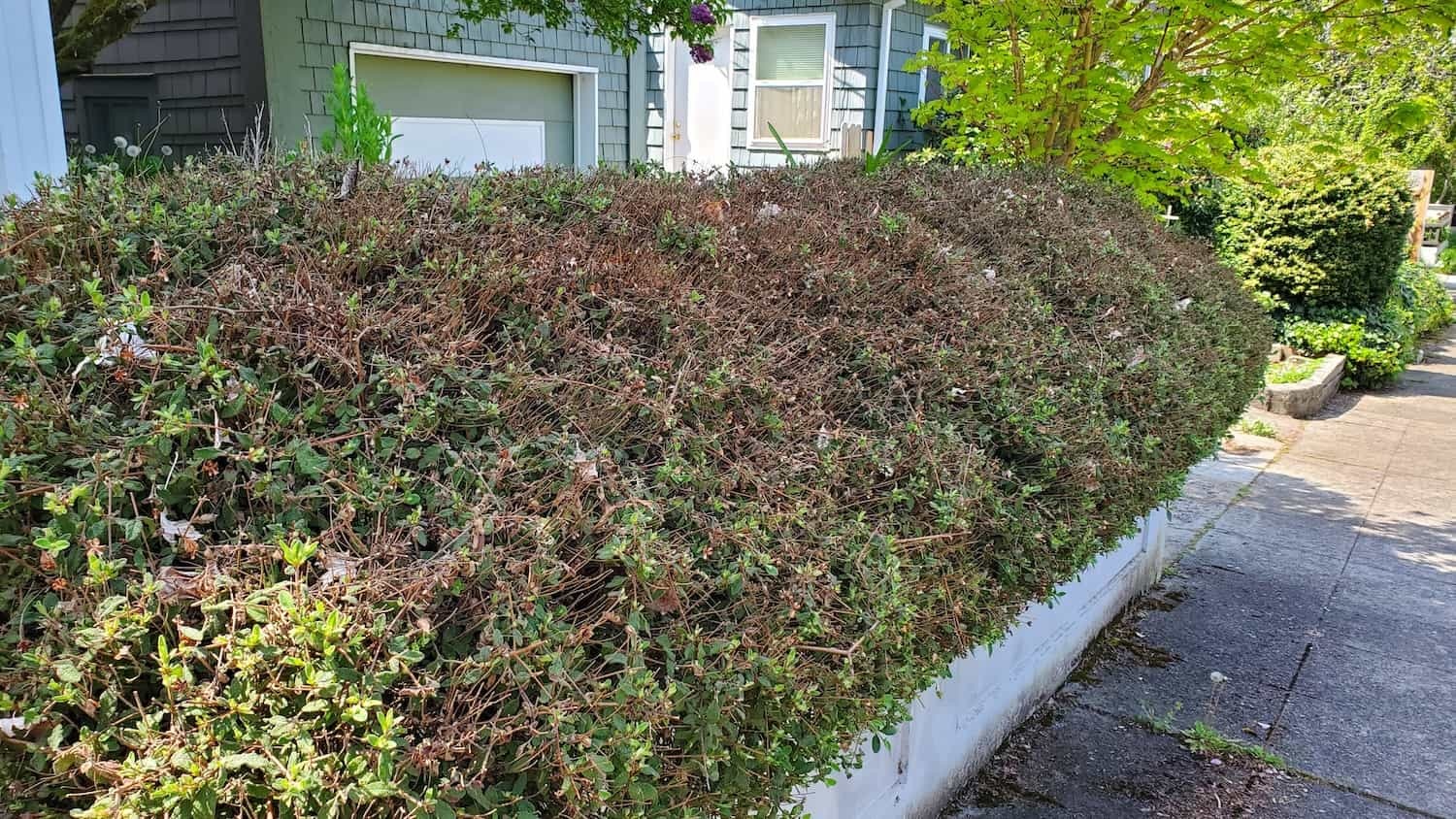
West Seattle Cut plants off chain-link fence
Homeowner’s Issue
In West Seattle a chain-link fence quickly becomes a green wall if you let it. The neighborhood’s heavy fall–spring rains combined with compacted glacial till and pockets of clay create fast growth and poor drainage—especially in lower-lying yards near Longfellow Creek and around Lincoln Park. Sunny, exposed fences on ridges and High Point dry out in July–August, while shady north-facing yards and alleyways stay damp year-round and get moss, ivy, and perennial weeds.
Common offenders are ivy, English laurel suckers, Himalayan blackberry, black raspberry, and climbing roses trained into the mesh. Salt spray near Alki and Harbor Avenue can weaken plant health, producing brittle vines that snap and wrap around fence fabric. Slopes and terraces make access tricky; roots pulled on a steep bank can take soil with them. HOA rules and curb-appeal standards in Admiral and parts of Morgan Junction often require tidy edges and visible fences.
We only use sustainable methods—hand pruning, mechanical cutting, smothering, and targeted removal with no herbicides—so you won’t get chemical drift on neighboring beds. Expect regular touch-ups in spring and heavy pruning seasons after blackberries fruit. This work keeps visibility, prevents fence damage, reduces rodent harborage, and saves you money over time by avoiding fence repairs and plant replacements.
Our Quality Service
We remove and cut back plants from chain‑link fences using hand tools, battery pruners, loppers, pruning saws, and rakes. For heavy vine mats we cut, disentangle, and hand‑pull roots where feasible, then follow with targeted smothering or mulch to suppress regrowth. On slopes we use erosion‑aware methods: cut-and-leave lower biomass as contour mulch or haul debris away when necessary.
Typical timelines: small jobs (up to 30 linear feet) — half day; medium jobs (30–75 ft) — 1 day; large or steep sites — 1–2 days with multiple crew members. We compost appropriate plant material, offer haul‑away for non‑compostable biomass, and can coordinate green waste bins for City of Seattle pickup. No herbicides—ever. Results: safer sightlines, longer-lasting fence, lower maintenance, and improved curb appeal.
What’s Included
- Assessment of fence line and plant species
- Hand pruning, cutting, and detangling from fence
- Root crown removal where practical (manual)
- Edging and light weeding along the fence base
- Mulch application (if selected) to suppress regrowth
- Cleanup and site sweep; composting or haul-away options
Options / Upgrades:
- Mulch + landscape fabric (spot application) for high-weed strips
- Organic control: manual digging, smothering, and repeated cut‑and‑remove cycles
- Plant replacement with low‑maintenance natives (e.g., ocean‑spray, salal, sword fern)
- Haul‑away vs. green‑waste bin coordination (City pickup or contractor haul)
- Minor fence brace/realignment observation (repairs quoted separately)
Before & After / Expectations
Be upfront: cutting plants off a chain‑link fence is messy and noisy for a few hours. Expect leaf litter, cut stems, and twig debris until we finish the cleanup. Access matters—18–24” clear access along the fence makes the job faster and cheaper; if we need ladders or extra manpower on a slope, that changes time estimates.
Timelines: a standard fence line is usually cleared same‑week with a photo estimate, or scheduled within 1–2 weeks for larger jobs. Heavier blackberry/ivy removal may require follow-up visits to catch regrowth. We leave roots exposed only when planning replanting or erosion control; otherwise we cover disturbed soil with mulch.
West Seattle care tips:
- Water deeply in July–August when replanting natives; morning watering avoids mossy conditions.
- Pull new blackberry shoots in late spring before canes harden.
- Moss thrives in shaded, compacted soil—improve drainage and increase light by pruning overhangs.
- Repeat hand‑weeding in early spring to reduce seed bank development.
FAQs
Q: Do you use herbicides?
A: No. We use only mechanical and organic methods—cutting, hand‑pulling, smothering, and mulching.
Q: How long before regrowth returns?
A: Fast‑growing vines and blackberries resprout quickly—expect shoots in 4–8 weeks. Follow‑up visits reduce regrowth over a season.
Q: Can you remove roots on steep slopes?
A: We remove what we can safely. On steep banks we favor staged removal and mulching to avoid destabilizing soil; major root excavation needs erosion control planning.
Q: Will you damage the fence?
A: We work to protect fence fabric; tangled metal may require minor straightening. Major fence repair is a separate quote.
Q: Do you haul green waste?
A: Yes—choose compost haul‑away, City green‑waste bin coordination, or contractor disposal. We compost appropriate material when possible.
Call to Action
If your fence line in West Seattle is a tangle, we’ll make it visible and low maintenance without chemicals. We book quickly and give clear, local advice—no fluff, just durable results. Email us for a free estimate and scheduling: neatandtidyseattle@gmail.com.


