


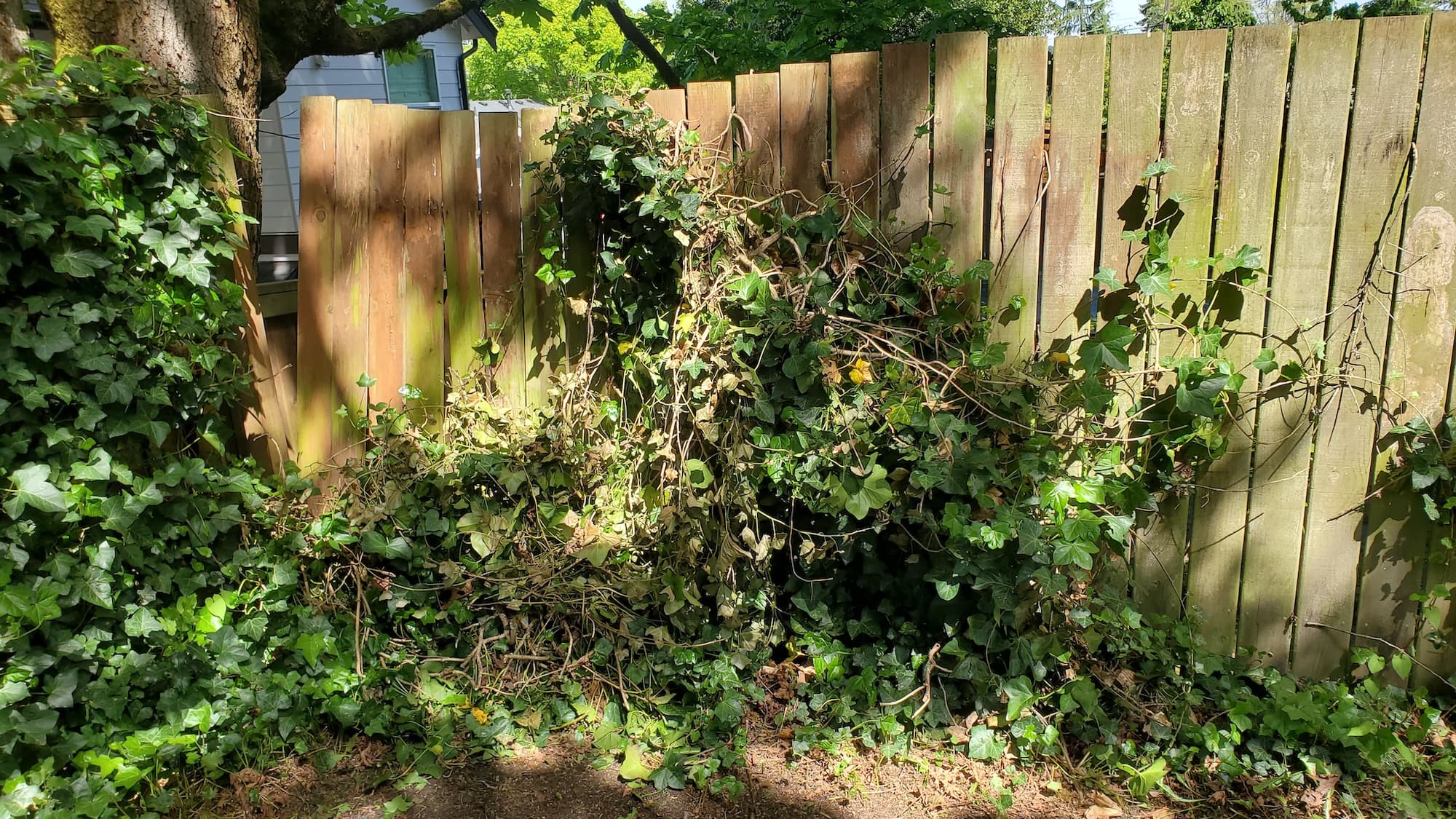
Weeding Pull vines off chain-link fences
Homeowner’s Issue
Weeding yards sit in a wet, cool maritime climate with frequent winter rain and drier summer stretches. That pattern favors fast-spreading vines (bindweed, English ivy, clematis) that cling to chain-link and add weight, trap moisture, and hide damage. Many properties in Weeding have compacted soils or patchy topsoil, so vines exploit gaps and downhill drainage paths on sloped lots. Sun exposure can vary block-by-block — shady northwest corners hold moss and ivy longer, while sunnier fence lines dry out and let opportunistic annuals take hold.
Homeowners face common challenges: invasive roots working through fence bases, leaves that stain and accelerate rust, and regrowth after partial clearing. HOA rules in nearby neighborhoods and places like West Seattle or Highline often require tidy fence lines and limit tall scrambling plants, so curb appeal matters. Manual removal done at the right season keeps fences intact, improves sight lines for safety, and reduces long-term maintenance. In short, the combination of Weeding’s rainfall, soil types, and slopes makes routine, sustainable vine control the practical choice for durable, low-maintenance yards.
Our Quality Service
We use hand tools, pruning, and mechanical detachment — no herbicides — to remove vines while protecting the fence. We assess root systems, cut and pull vines from the mesh, dig problematic roots near posts, and tidy the area so drainage and airflow improve.
Local insight: we time work to avoid saturated winter soils that compact easily, and we watch slopes where cut vines can roll downhill. Benefits include safer yards, restored curb appeal, reduced pest habitat, and less frequent return visits.
How we work
- Onsite assessment and clear plan.
- Hand-pulling, careful cutting, and root removal.
- Clean haul-away or green-bin sorting.
- Optional follow-up checks for regrowth.
What’s Included
- Full inspection of fence line and adjacent plantings.
- Manual vine pulling from chain-link and trimming of overhangs.
- Root collar excavation where vines re-sprout.
- Debris removal: haul-away or compost/green-bin sorting.
- Light edging and sweep of the immediate area.
Options / upgrades:
- Mulch + landscape fabric along fence line to smother regrowth.
- Organic, non-chemical smothering techniques (cardboard/mulch).
- Haul-away vs. green-bin composting.
- Planting low-maintenance shrubs to replace invasive vines.
Before & After / Expectations
Expect some noise from cutting tools and a short window of debris while we work. Access to the fence line (gates or driveway space) makes the job faster and cheaper. We will leave the area swept and explain where roots were removed and where to watch for regrowth.
Care tips for Weeding yards:
- Keep mulch 2–3 inches away from fence posts to prevent rot.
- Check fence bases after heavy rain on slopes to ensure good drainage.
- Trim new shoots early in spring and mid-summer to stop re-establishment.
- Replace removed vine areas with low-maintenance native shrubs if curb appeal is a concern.
FAQs
Q: How long will it take?
A: Most single-family fence lines take a half-day to a day. Larger or heavily overgrown sections may need a second visit.
Q: Do you use herbicides?
A: No — we use only manual and physical, sustainable methods (mulch, smothering, root removal).
Q: Will the vines come back?
A: Vines with deep roots can resprout; removing roots and applying mulch/fabric or planting alternatives reduces re-growth.
Q: Do you handle HOA rules?
A: Yes. We’ll discuss any HOA guidelines during the estimate and suggest compliant solutions.
Call to Action
If vines are weighing down your fence or hiding damage, book a free estimate with a local crew that knows Weeding, West Seattle, and the Highline area. Fast scheduling, reliable results, and sustainable methods make maintenance simple. Email neatandtidyseattle@gmail.com or call 206-538-9344 to set up a visit.


