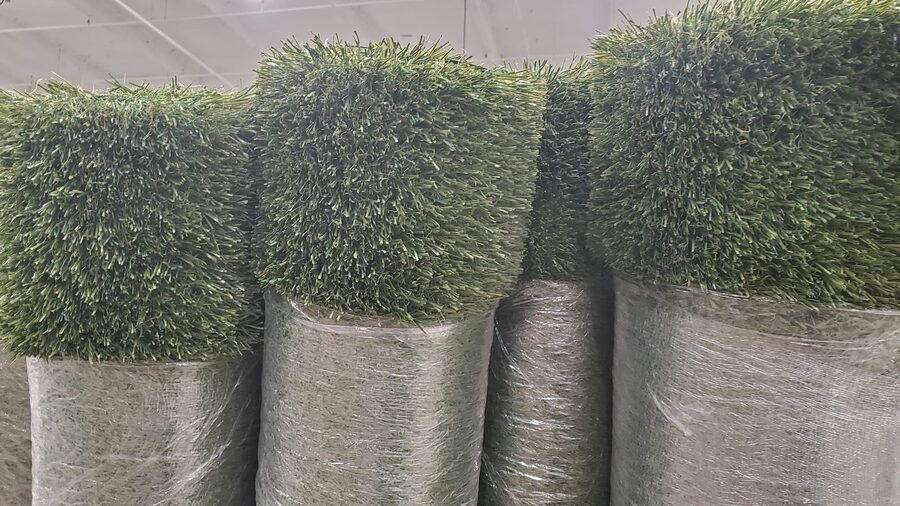
Hey guys, here’s the truth. You can install artificial turf yourself. But buying a roll and installing a lawn are two different amounts of work.
I go to Costco about once a month, sometimes twice, with my wife. I always look at the landscaping products. You can almost tell what season we’re in just by walking through the store. Plants, outdoor furniture, Halloween costumes. Everything rotates.
On one of those trips, I saw rolls of artificial turf. Nice and green, wrapped up, ready to go.
I understand the appeal. You’re getting eggs, milk, and cheese, and there’s your new lawn sitting right there. Buy it, bring it home, roll it out. Done, right?
Depending on what you want, maybe. But if you’re expecting a permanent outdoor space that looks clean and drains properly, there’s a lot more work between the shopping cart and the finished yard.
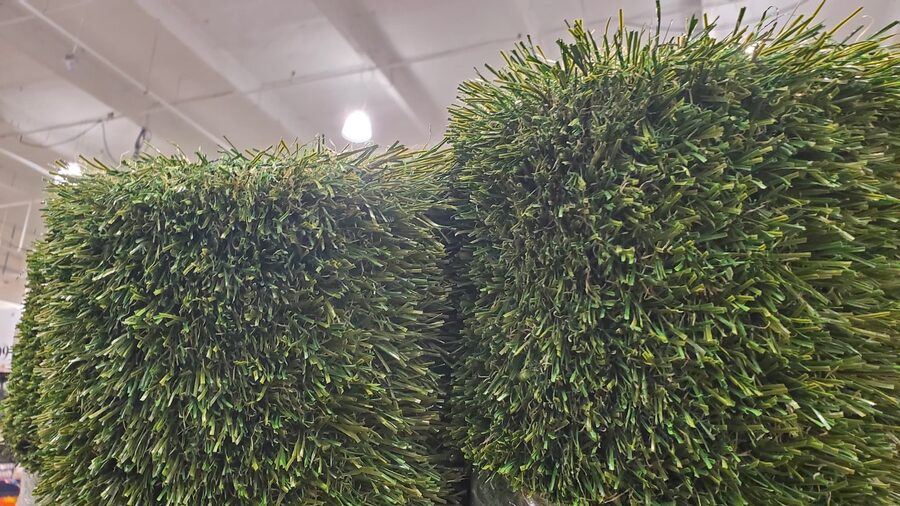
The roll is only one part of the project
First, define the area. Measure it. Get your square footage. Look at the house, fences, walkways, and everything next to it. Where will the edges finish? Where does the water go now?
That’s the easy part.
Then you have to prepare the ground. Remove the existing grass, roots, and unsuitable material. Excavate enough room for the base and the finished turf. Bring in the right aggregate, spread it, compact it, and get the grade right.
There isn’t one excavation depth for every yard. Some supplier guides start around three to four inches of soil removal. A site with soft ground or drainage problems may need a different approach. Six to eight inches isn’t an automatic requirement. Follow the turf manufacturer’s instructions and account for the ground you actually have.
Either way, material adds up fast. A 300-square-foot area excavated four inches deep is about 3.7 cubic yards before the soil loosens up. You still have to move it, load it, and haul it away. Then bring your base material back in.
You can easily be dealing with thousands of pounds. How are you getting that through a narrow side gate? Who’s hauling the soil? Where does the gravel delivery go?
That’s the part people need to think about before buying the roll.
Water management comes first
A lot of landscaping comes down to water management. Where does the rain land? Where does it move? Where does it collect?
Artificial turf doesn’t fix those problems just because it looks green.
You need a stable base and a drainage plan. A smooth surface isn’t necessarily a perfectly flat surface. It can have a gentle slope that carries water away from the house. One supplier’s guide uses a one to two percent drainage grade, but the right design depends on your site.
If you cover uneven dirt, the turf follows that uneven dirt. If the base shifts or water has nowhere to go, you can end up with low spots, puddles, and a surface you have to pull up and fix.
Don’t assume water passing through the turf means it can also pass through the ground underneath.
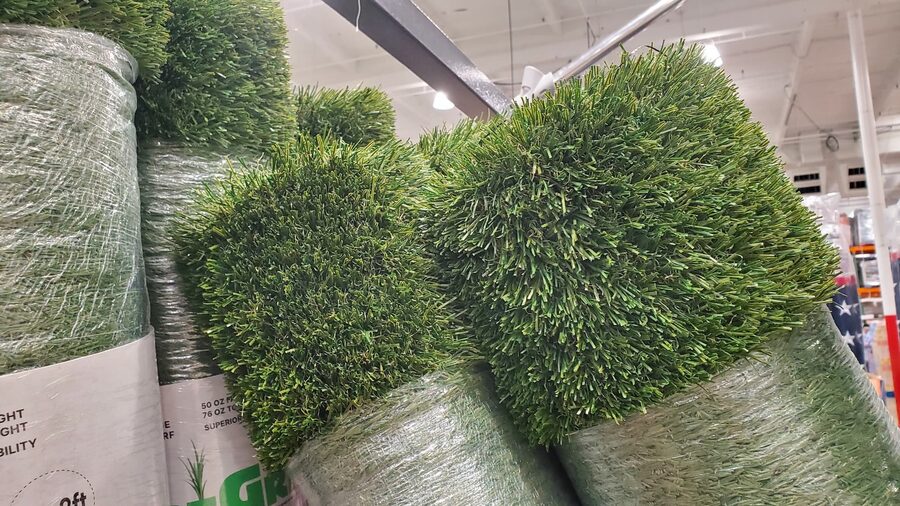
Then you still have to make it look good
Once the base is ready, you roll out the turf. Now you’re cutting around edges, fitting corners, and matching pieces.
The grass fibers need to face the same direction. The seams need to meet cleanly. Depending on the system, that can mean seam tape and adhesive, plus the specified nails or staples. Many products also need infill brushed into the fibers.
That takes patience. You’re trying to make separate rolls look like one continuous lawn, without obvious seams, wrinkles, or loose edges.
Sound easy? Go ahead and try it.
A capable homeowner can learn. But don’t assume you’ll become good at excavation, grading, compaction, and turf installation in one weekend because the product came in a roll.
A small turf mat is a different job
There are simpler uses. Maybe you want a small removable patch on an existing patio. Maybe you want a spot for your dog to take care of its business.
That’s a different goal from building a permanent backyard lawn.
Even on concrete, think about where the water goes and how you’ll keep the edges secure. For a dog area, think about how you’ll lift it, rinse it, and clean underneath it. It’s still a surface you have to maintain.
Can a simple setup work for you? Sure. Just be clear about the result you’re buying.
Budget for everything underneath it
The price on the roll isn’t the price of the finished project.
There’s excavation, disposal, delivery, base material, equipment rental, edging, seams, fasteners, and whatever finishing materials your turf requires. Then there’s your time.
I would compare the whole project with other ways of using that space: a lawn, gravel, pavers, or concrete. Turf doesn’t automatically cost the same as pavers. But once you include the ground preparation, it deserves a serious budget.
Right now, artificial turf installation isn’t a service we’re offering. I’m sharing this because the roll on the shelf makes the project look simpler than it is.
Do what you want to do. If you want to tackle it yourself, plan it out. If you just want a small patch for a specific purpose, understand what that setup will take.
But don’t grab a roll with your eggs, milk, and cheese and assume you’ve bought a finished lawn. You’ve bought the turf. The work is still waiting at home.